

Drive past a row of homes on Balboa Peninsula, and the pattern shows up fast. Many homeowners in Newport Beach, CA, call exterior painters after spotting the same problem on their own siding: salt air paint damage. Chalky walls. Blistered trim. Paint flaking near the rooflines on houses that look only a few years old. Paint that holds for 10 years inland can start failing in 3 to 5 years near the water. The frustrating part is not that it happens. It is that most people only find out after the second repaint.
Key Takeaways
- Salt air carries sodium chloride particles that land on siding, trim, and stucco. They pull moisture into the paint film.
- Coastal homes near the Pacific often see paint life cut nearly in half compared to inland properties.
- Standard exterior house painting methods rarely hold up in marine conditions without coastal-grade systems.
- Early signs of salt air paint damage include chalking, color fading, blistering, and peeling paint near the edges.
- A planned maintenance schedule slows coastal paint failure. It also protects the wood, stucco, and metal underneath.
Why Salt Air in Newport Beach Hits Paint So Hard
Newport Beach sits right on the Pacific. Ocean breezes carry tiny salt particles inland. Those particles do not stay in the air. They land on stucco, wood siding, fascia boards, garage doors, railings, and window frames. Once they settle, they pull water out of the air. They hold it against the paint film, which is exactly what paint is built to repel.
Morning fog rolls over the peninsula and hangs on the south-facing walls for hours. The result is a surface that almost never fully dries. Paint binders soften. Pigments fade. The film loses its grip on the surface underneath. That cycle is what most people call salt air paint damage. It also explains why exterior paint peels first on the side of the house facing the water.
The Pacific Coast Highway corridor adds another factor. UV exposure here is strong year-round. Sun and salt together break down paint faster than either one alone. Inland homes might lose color slowly. Homes near the water can show fading in a single summer. So when homeowners ask exterior painters in Newport Beach, CA, why their last paint job did not hold, the answer usually traces back to that combination.
The Real Numbers Behind Coastal Paint Failure
Industry data on paint life is consistent on one point. A solid exterior paint job can last seven to ten years in inland areas. On the coast, that timeline often drops to three to five years. Exposure plays a big role. Newport Beach homes facing the open water tend to land at the lower end of that range. Homes a few blocks back, behind other structures, often hold paint longer.
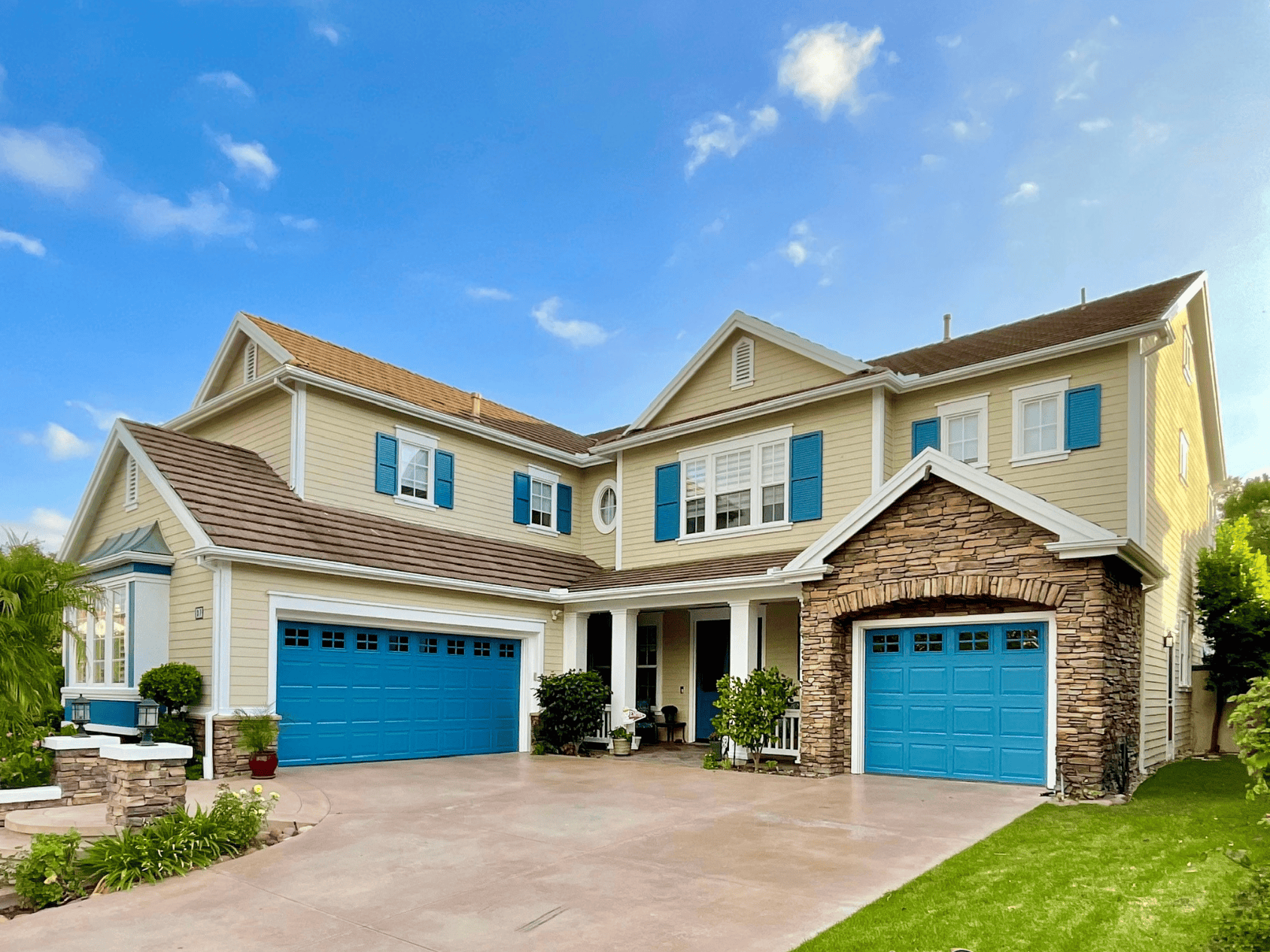
That is not a small difference. Over twenty years, a coastal home may need four or five repaints. An inland home needs two. The cost difference adds up quickly.
Coastal paint failure is rarely about bad workmanship. It is about a coating system that was not built for marine conditions. Standard acrylic latex performs fine in dry inland climates. Near the ocean, it gets pushed past its limits. The result is visible chalking, blistering, and exterior paint peeling at edges, joints, and trim lines. Most homeowners who book exterior painters in Newport Beach, CA, after a failed repaint hear the same answer. The previous coating system was wrong for the location.
What Salt Air Paint Damage Looks Like Up Close
Most homeowners notice the problem during a rinse-off. Some spot it when walking past the fence line. The signs are specific.
- A white powder that comes off when you wipe the siding with your hand. That is chalking, a sign the binder is breaking down.
- Color that looks dull on the seaward side and bright on the leeward side. UV and salt are working together.
- Small bubbles or blisters in the paint film often appear near the bottoms of walls where moisture collects.
- Exterior paint peeling along caulk lines, around window frames, and on south-facing trim.
- Rust bleeding from nail heads, hinges, and rail brackets where salt has reached the metal underneath.
If three or more of those show up, the paint film has lost its protective function. Repainting over it without proper prep just hides the issue for a few months. Salt air paint damage works at the substrate level, not just the surface. Skipping prep work is the most common reason coastal paint failure repeats. Honest exterior painters in Newport Beach, CA, will tell you when prep alone can save the substrate and when it cannot.
What to Use Instead of Standard Exterior Paint
Coastal-grade systems differ from standard exterior house-painting products in three ways. First, they use binders that resist chloride penetration. That is what makes salt damage possible in the first place. Second, they hold pigment longer under heavy UV. Third, they flex with temperature swings without cracking. That matters for stucco and wood that expand and contract through the marine layer cycle.
Sherwin-Williams and Benjamin Moore both produce exterior systems rated for high-exposure coastal conditions. Marine-grade primers, elastomeric topcoats, and direct-to-metal coatings on railings and fixtures all play a role. The product alone is not enough. Surface prep, drying conditions, and film thickness matter just as much. Salt air paint damage at the substrate level requires more than a fresh topcoat over a chalky surface.
The industry standards published by the Painting Contractors Association cover surface prep levels and what counts as a properly painted surface. Crews that follow those standards on coastal jobs deliver longer-lasting work. Most coastal paint failures trace back to skipped prep, not to bad paint. Experienced exterior painters in Newport Beach, CA, will specify those steps on every coastal job.
A Simple Plan for Newport Beach Homeowners
The plan for protecting a coastal home is short. It does not require special knowledge. It requires a crew that takes coastal conditions seriously. Exterior house painting on the coast is a different job from inland work.
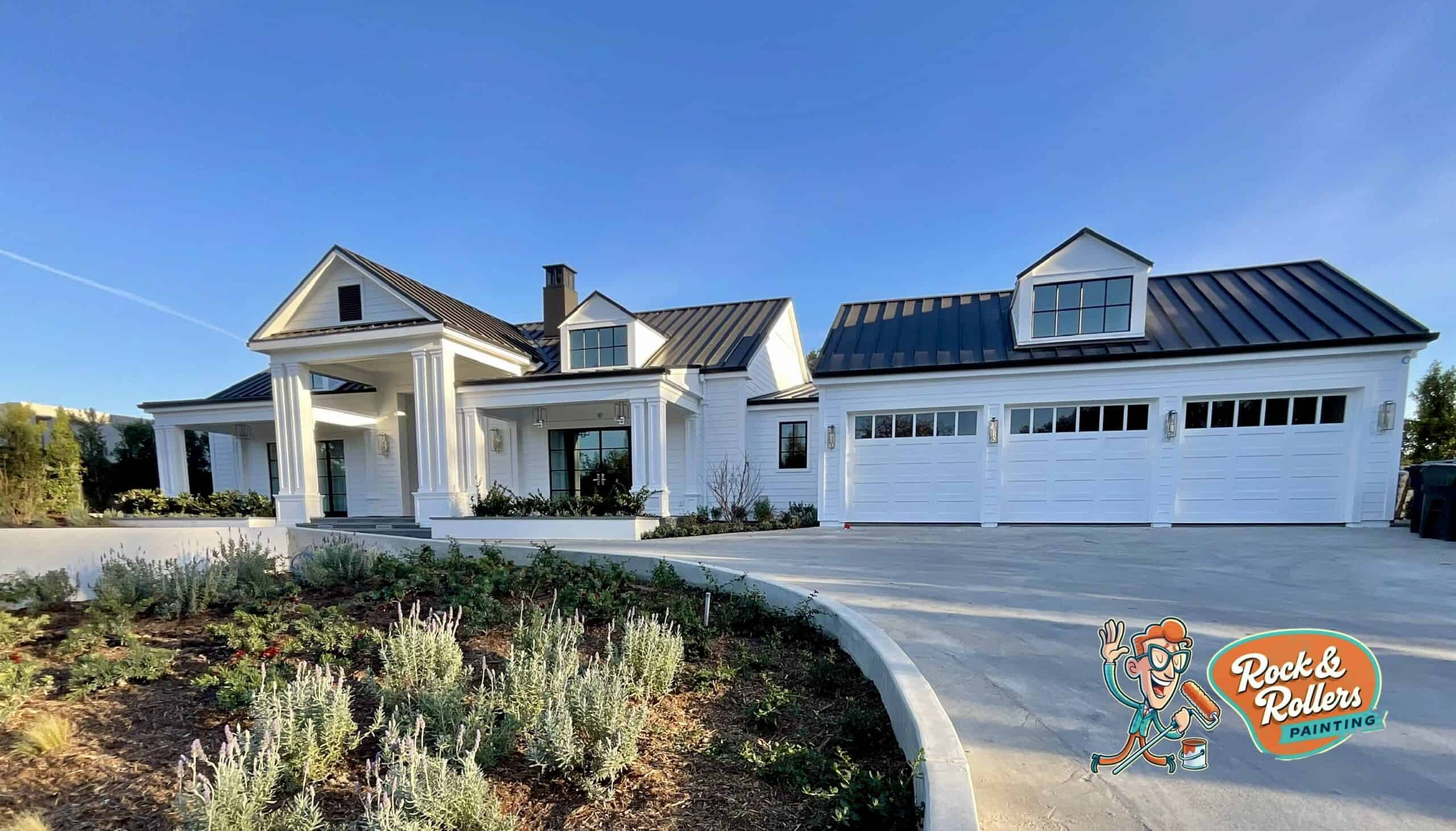
First, a free inspection of the current paint film, the substrate, and the high-exposure areas. Second, a written scope that lists prep level, primer, topcoat, and number of coats. Third, scheduled rinse-downs and touch-ups every twelve to eighteen months. That removes salt buildup before it bonds to the film.
When picking exterior painters in Newport Beach, CA, ask three questions. What coatings do you specify for oceanfront work? How do you prep surfaces with active chalking? What is your warranty if exterior paint peeling shows up within two years? Crews that handle a lot of exterior house painting on the coast will answer clearly. They give product names and process steps. Crews that cannot, will not.
Don’t Settle for the Same Repaint Cycle
Some homeowners accept the three-year repaint cycle as the cost of living near the ocean. It does not have to be that way. The right product system and proper prep can stretch a coastal repaint to six or seven years. With maintenance, it can hold longer. That single change saves tens of thousands of dollars across the life of the home.
Repeating the wrong process gets the same result. A crew that uses the same standard exterior house-painting products and skips coastal-specific prep will give you the same chalk, blistering, and exterior paint peeling two summers later. Salt air paint damage is predictable. So is the fix. Reliable exterior painters in Newport Beach, CA, will not run that same play twice.
Talk to a Crew That Knows the Coast
If your home shows the signs and you are tired of watching paint fail before its time, the next step is a conversation. Not a quote. A real inspection takes about thirty minutes. It tells you what is happening under the paint. It also shows how much life remains in the substrate and which coastal-grade system fits your home.
Call Rock & Rollers Painting at 949-806-3205 to schedule an exterior inspection. The team has worked on homes across Newport Beach, Corona del Mar, and Balboa Island. They know what salt air paint damage does to paint, wood, and metal over time. You get a written scope, clear product specs, and an honest answer. The answer covers whether your home needs a full repaint or targeted repair. As exterior painters in Newport Beach, CA, focused on coastal conditions, the team treats every job as a protective measure for the home. Not just a fresh coat.
No pressure. No upsell. Just the information you need to protect what you already own.