

Key Takeaways
- Surface damage and structural damage are two completely different problems. Faded color, minor cracks, and worn stain are cosmetic and almost always point toward restoration, not replacement.
- The connection points matter more than the deck boards. Roughly 90 percent of deck collapses trace back to the ledger board, the part that attaches your deck to the house, not the surface you walk on.
- Soft, spongy wood is the real warning sign. If a screwdriver sinks a quarter inch into the wood without effort, that section has decay and needs to be replaced.
- Replacing is not always the safer choice. A full rebuild costs several times as much as targeted repairs, and a wood deck recoups only about 83 percent of its cost at resale.
- An honest inspection should tell you both options. A trustworthy contractor will point to specific boards and explain exactly why each one can be saved or has to go.
What Deck Restoration Actually Means
Wood restoration is the process of bringing a structurally sound deck back to life without replacing its bones. Done right, deck restoration means a deep cleaning to strip off years of grime and dead surface wood. It means sanding down splintered spots, swapping out individual damaged boards, and sealing or staining the whole thing so it stands up to the next several years of sun and rain. The framing stays. The footings stay. The parts doing the heavy lifting stay. This is the path for most of the decks I see. Here is the uncomfortable truth a lot of contractors will not say out loud: restoration is less profitable than replacement, so plenty of them skip straight to the rebuild quote. A deck that needs a few hundred dollars of board swaps and a good refinishing is not the job that pays for a new truck. That does not make replacement the right call for your deck. It just means you should understand what you are actually looking at before someone hands you an estimate. Rock & Rollers Painting handles this kind of work across Orange County, Los Angeles, and the Inland Empire, from wood repair and restoration on fascia, siding, and decking to matching new boards to your existing finish. The point of restoration is simple: keep what works, replace only what does not, and skip the demolition bill entirely.The Signs That Point Toward Restoration
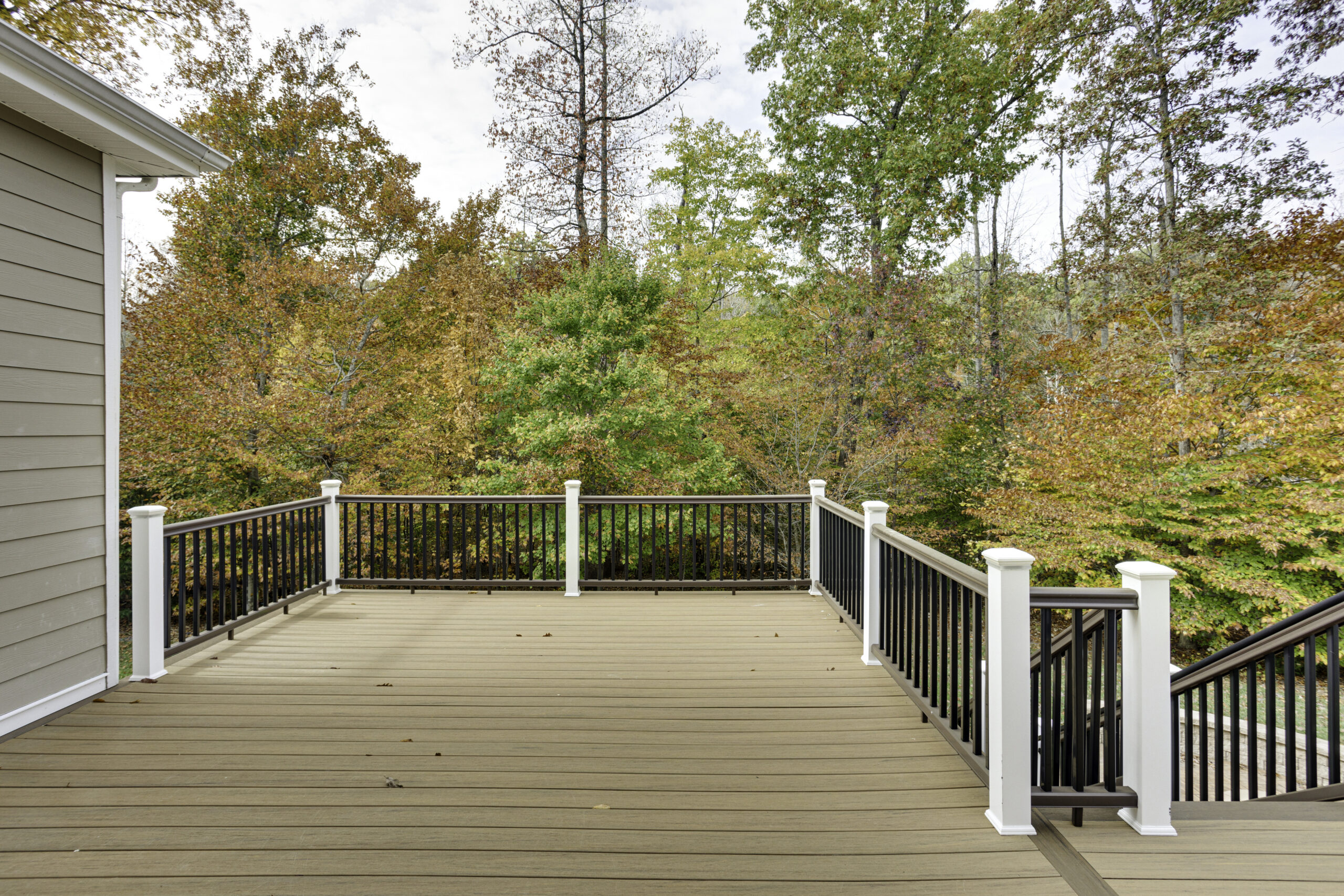
The Signs That Point Toward Replacement
Now the other side, because pretending every deck can be saved would be its own kind of dishonest. Some damage runs deeper than a refinishing can reach, and the warning signs are physical, not visual. The screwdriver test is the one I trust most. Press a screwdriver or even a key into the wood, especially in areas that stay damp or sit low to the ground. The North American Deck and Railing Association puts it plainly: if the tool sinks in a quarter to half an inch without much resistance, decay is present, and that wood needs to come out. Soft, spongy, crumbling wood is rot, and rot does not get refinished; it gets removed. Damage to the structural pieces is the serious category. Your deck boards are the part you see, but the joists, beams, posts, and ledger board underneath hold you up. When rot reaches those, you are no longer talking about a cosmetic fix. The ledger board deserves special attention. It bolts your deck to your house, and roughly 90 percent of deck collapses come from that single connection failing. A ledger that is rotted, pulling away, or only nailed on instead of bolted is a safety problem you do not negotiate with. Widespread rot is the tipping point. One soft board is a repair. Soft boards across half the deck, rot that has spread from the surface into the framing, posts gone punky where they meet the ground- that is a deck telling you its useful life is over. The Forest Products Laboratory notes that the decay fungus that destroys wood needs the material to stay wet, with moisture content well into the high twenties. When water has been feeding that process throughout the structure, a rebuild is usually the honest answer.How to Tell the Difference Before You Pay Anyone
You do not need to be a carpenter to get a read on your own deck. A fifteen-minute walk-through tells you most of what you need to know. Start underneath if you can reach it. Look at the joists and the ledger board where the deck meets the house. Press on the wood in any spot that looks dark, stained, or damp. Firm wood is good news. Wood that gives or flakes is not. Then move to the deck surface and do the same screwdriver test on the boards, paying attention to the ends and anywhere two pieces of wood meet, because those joints are exactly where water collects, and rot starts. Here is the rule of thumb I give people: if the problems are on top and the structure underneath is solid, you are almost certainly a restoration candidate. If the structure itself is compromised, especially the ledger or the posts, replacement moves onto the table for real. And if you genuinely cannot tell, that is exactly when a professional inspection earns its keep. A good one should not end with a single number. It should end with someone pointing to specific boards and telling you which ones stay, which ones go, and why.Why the Money Math Usually Favors Restoration
A full deck replacement in Southern California runs into the thousands, often well past ten thousand dollars once you account for demolition, hauling, new lumber, labor, and any permit work. Restoration on a structurally sound deck is a fraction of that. The cost difference is significant, and it is the main reason getting the diagnosis right matters so much.
Get a Straight Answer About Your Deck
If you are standing on your deck wondering which side of this line you fall on, stop guessing and get eyes on it from someone who will tell you the truth either way. Rock & Rollers Painting has spent over two decades repairing and restoring wood throughout Orange County, Los Angeles, and the Inland Empire, and our team will show you exactly which boards can be saved and which cannot, with the reasoning behind every decision. You will get a clear, itemized look at your options, restoration and replacement both, so the decision stays yours and nothing gets oversold.
Your deck has more seasons left in it than you might think, or it might be time to start fresh, and the only way to know is to look. Call Rock & Rollers Painting today at 949-806-3205 for a free, no-pressure inspection, and find out what your deck actually needs before you spend a dollar more than you have to.