

Every spring, I get calls from homeowners standing on a gray, cracking deck asking the same question: wood stain vs paint, which one actually holds up? If you are facing a deck refinishing decision right now, you are asking the right question at the right time, because the finish you pick this year determines whether you are back out here redoing the work in twelve months or enjoying a deck that looks good for years. Before you grab a can off the shelf at the hardware store, I want to walk you through what really happens to each finish once it meets our Orange County sun, and why the first call sometimes is not about paint or stain at all. It is about the wood underneath, which is where our wood repair team gets involved before any finish goes on.
Key Takeaways
- Paint forms a film on the wood, so it can crack and peel faster on deck floors than on walls or siding.
- Stain soaks into the wood rather than forming a surface layer, so it tends to wear down evenly rather than chip.
- Most professionally stained decks need a fresh coat every two to three years, while painted deck floors often need touch-ups sooner.
- The right finish depends on your deck’s current condition, not just the look you want.
- Cracked, warped, or rotting boards should be repaired before either paint or stain goes on, or the new finish will fail early, too.
Why Wood Stain vs Paint Isn’t Just a Style Choice
Most homeowners start this decision by picturing colors and finishes. That is a reasonable place to start, but it is not where the decision actually gets made. Your deck floor takes a different kind of beating than your fence or your siding. It gets walked on, rained on, and baked by direct sun for most of the day here in Orange County. That combination is exactly what causes finishes to fail, and it is why the same paint that lasts for years on a wall can start peeling on a deck floor within a single season.
What Actually Happens to Paint on a Deck
According to research from the USDA Forest Products Laboratory, wood constantly expands and contracts as temperature and moisture change. Paint forms a solid film on top of the wood, and that film has to flex along with the boards underneath it. On a horizontal deck floor, where sun exposure and foot traffic are both at their highest, that film gives out sooner than it would on a vertical wall. That is the honest, unglamorous reason painted deck floors tend to show peeling and cracking well before painted siding does. This has nothing to do with paint quality and everything to do with where paint is applied.
What Stain Does Differently
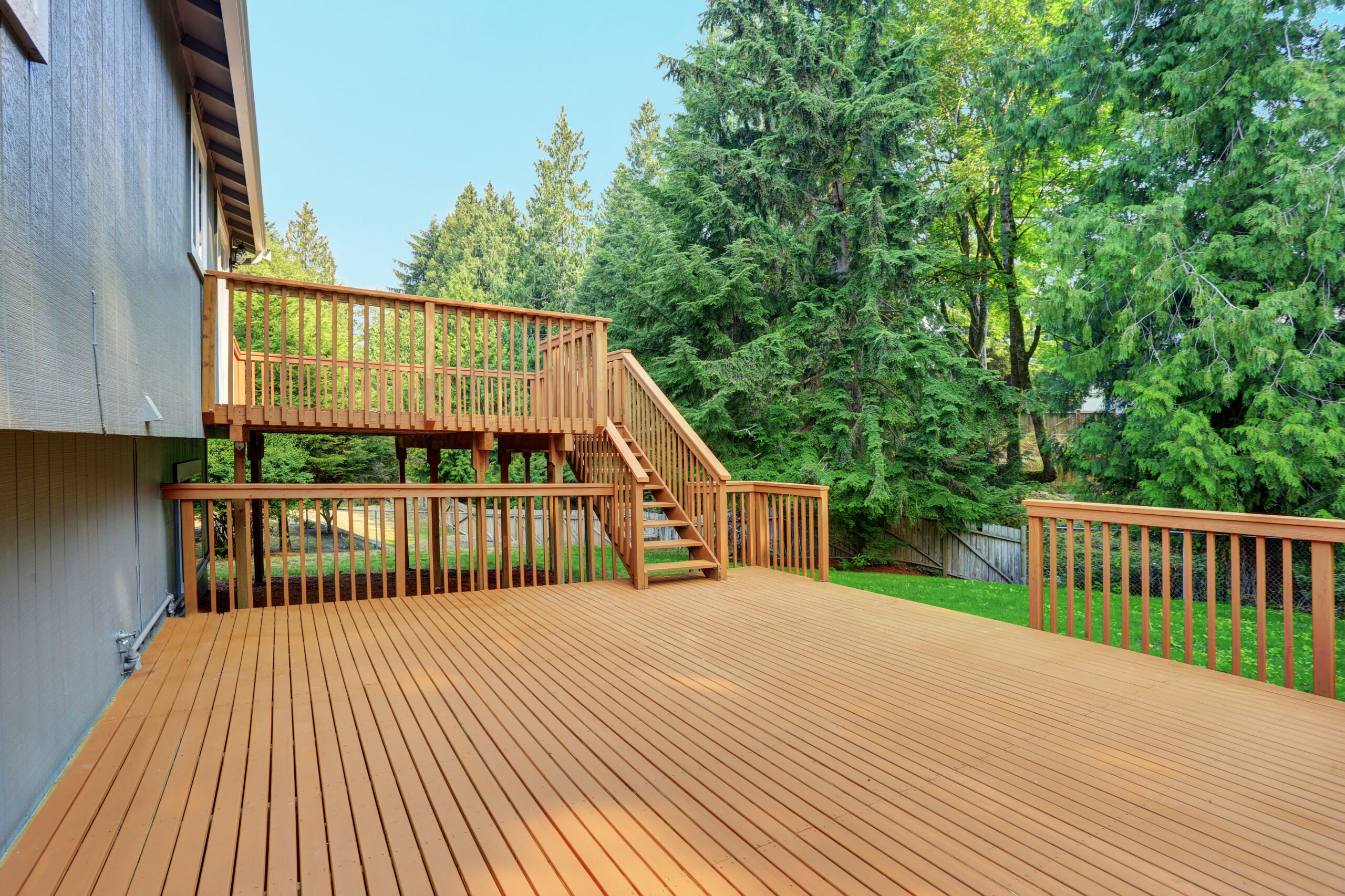
Stain, especially a semi-transparent or solid penetrating stain, soaks into the wood fibers instead of sitting on top of them. Because there is no rigid film to crack, stains tend to fade and wear gradually rather than chip off in sheets. That is part of why most painting professionals recommend restaining a deck floor every two to three years, whereas painted decks often need spot touch-ups within the first year or two of heavy use. Neither finish is maintenance-free, but one wears down gracefully, and the other tends to fail visibly.
The Comparison, Side by Side
| Factor | Wood Stain | Paint |
|---|---|---|
| How it protects wood | Penetrates the wood fibers | Forms a surface film |
| Typical lifespan on a deck floor | 2 to 5 years, depending on stain type | Often 1 to 3 years before touch ups |
| How it ages | Fades and wears gradually | Can crack, peel, or bubble |
| Best fit | Decks with good wood grain you want visible | Decks where you want to hide surface imperfections |
| Repair visibility | Blends easily into future recoats | Touch-ups can show a different sheen or color |
None of these numbers is a guarantee. They shift depending on your wood species, how much direct sun your deck gets, and how well the surface was prepped before the last coat went on, which brings up the part of this decision most homeowners skip.
What Deck Refinishing Actually Costs in Orange County
Professional deck staining typically runs $550 to $1,250 for an average-sized deck, according to industry cost data, with larger decks over 500 square feet landing on the higher end, depending on the amount of prep work needed. Painting a deck floor can start in a similar range, but the real cost difference tends to show up later. Weathering studies on decking materials, including testing covered by Fine Homebuilding, have documented how sun and moisture exposure wear down painted surfaces faster than penetrating stains, which can mean paying for partial repaints every year or two instead of a full recoat every few years.
None of this means paint is a bad choice for every deck. It means the price on day one is not the full picture. If you are comparing quotes from different companies, ask exactly what surface prep is included, because a coat applied over a poorly cleaned or under-repaired deck will fail early, no matter which finish you pick. That is usually where money gets wasted, not in the can of stain or paint itself.
The Real Question Before Any Deck Refinishing Project
Here is what I tell almost every homeowner who calls me about deck refinishing: the finish is the last decision, not the first one. Before stain or paint goes anywhere, the wood itself needs an honest look. Cracked boards, soft or spongy spots, and warping are signs the wood has already started to fail structurally, and no finish, however good, will fix that. Applying a fresh coat over damaged wood usually just hides the problem for a few months before it reappears, often worse.
This is where Rock & Rollers Painting’s wood repair services come in ahead of any refinishing work. Our carpenters have spent over 25 years repairing and replacing damaged wood across Orange County, Los Angeles, and the Inland Empire, working on everything from deck boards to fascia and siding. Once damaged sections are replaced with matching lumber, that new wood can be painted or stained to match the rest of your deck, so the repair blends in rather than standing out.
Making the Call for Your Deck
A few honest questions can point you toward the right finish:
- Do you like seeing the wood grain, or would you rather have a uniform color? Stain shows grain; paint covers it.
- How much direct sun does your deck get during the day? More sun generally means a shorter finish life, either way, but paint tends to show it sooner.
- Are there any soft, cracked, or warped boards right now? If yes, that gets addressed before any finish decision matters.
- How much upkeep are you willing to do? Stain typically means smaller, easier recoats. Paint touch-ups can be more visible if they don’t match perfectly.
There is no universal right answer here. A well-maintained wood deck in a shaded backyard can hold up well with paint for a few years. A sun-exposed deck getting daily foot traffic usually holds up better with stain. The honest answer depends on your specific deck, not a general rule you read online.
What This Looks Like With Rock & Rollers Painting
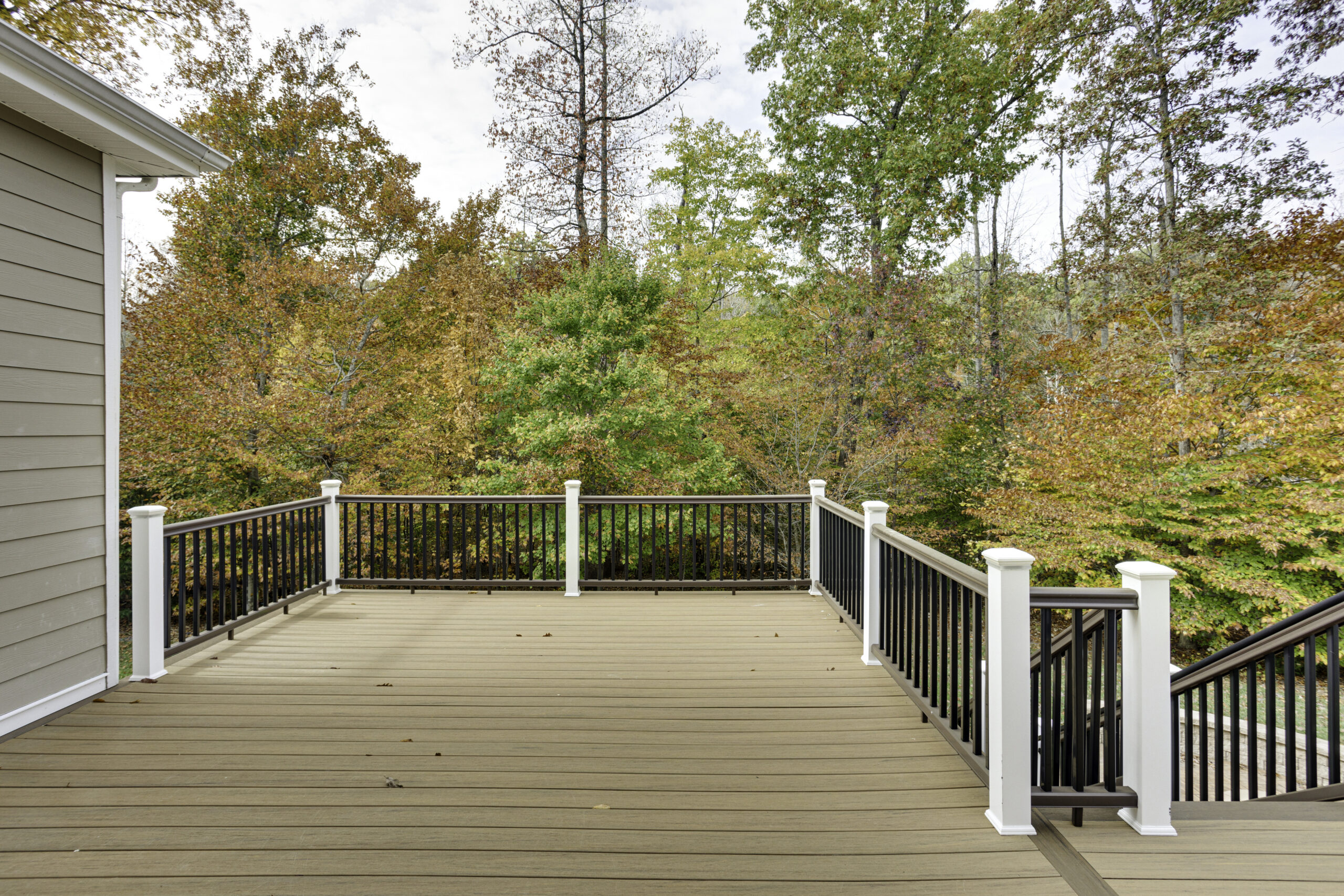
I would rather walk your deck with you and give you a straight answer than sell you a finish that isn’t right for your wood. When our team comes out, we look at the boards themselves first: their condition, how much sun exposure they get, and whether any wood repair is needed before staining or painting begins. That assessment determines whether stain or paint is the smarter long-term choice for your deck, not a generic recommendation.
Ready for a Deck Finish That Actually Holds Up?
You already know what a peeling, patchy deck floor looks like. Rock & Rollers Painting has spent more than 25 years assessing, repairing, and refinishing wood across Orange County, Los Angeles, and the Inland Empire. We check the wood first, recommend stain or paint based on what we actually see, and handle any wood repair before the new finish goes on.
Call Rock & Rollers Painting today at 949-806-3205 and ask about deck refinishing. Or reach out through our wood repair services page. You get a deck finish built for real Orange County sun, and a straight answer before you spend a dollar on stain or paint.